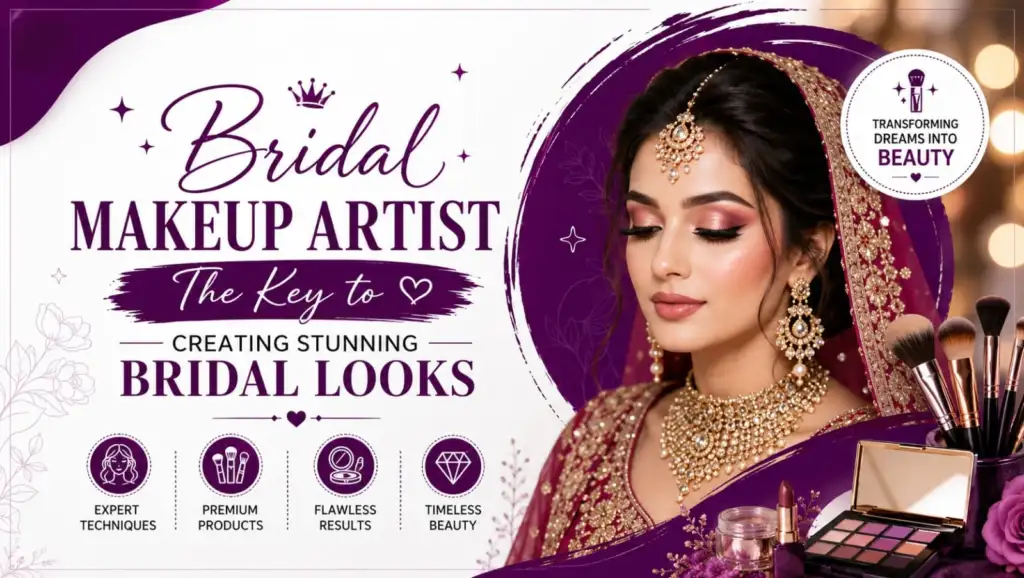
Bridal Makeup Artist: The Key to Creating Stunning Bridal Looks
Every bride dream of looking flawless on her wedding day, making the role of a Bridal Artist more important than ever. Creating a stunning bridal look requires more than applying makeup – it demands expertise in skin preparation, color matching, long-lasting techniques, and personalized styling. With weddings becoming more elaborate and photography-focused, professionally trained bridal makeup artists are in high demand. The beauty industry continues to expand worldwide. In 2024, the global beauty market was valued at over ₹28 lakh crore, while the global beauty and personal care industry generated approximately ₹51 lakh crore in sales. This growth has created exciting career opportunities for skilled bridal makeup professionals across salons, bridal studios, destination weddings, and freelance businesses. In this guide, you’ll learn: Whether you aspire to build a successful beauty career or specialize in bridal makeup, this guide will help you understand why becoming a Bridal Makeup Artist is a rewarding and future-ready profession. Who Is a Bridal Makeup Artist? A Bridal Artist is a beauty professional who specializes in creating flawless, long-lasting makeup looks for brides on their wedding day. Unlike regular makeup artists, bridal makeup artists understand how to customize makeup based on the bride’s skin type, face shape, wedding attire, lighting conditions, and photography requirements. Their goal is to enhance the bride’s natural beauty while ensuring the makeup remains fresh throughout the ceremony and celebrations. With India’s wedding industry growing every year, the demand for skilled bridal makeup artists continues to rise. Couples increasingly invest in professional beauty services to ensure picture-perfect wedding memories, creating excellent career opportunities for trained makeup professionals. A professional bridal makeup artist is responsible for: Why Choose a Professional Bridal Makeup Artist? A Bridal Artist does far more than apply cosmetics. They combine technical expertise, creativity, and attention to detail to create memorable bridal transformations. With professional training, practical experience, and an understanding of modern bridal trends, they play a key role in making every bride look and feel her absolute best on one of the most important days of her life. Essential Skills Every Bridal Makeup Artist Should Master A successful Bridal Artist needs more than creativity and a passion for beauty. Every bride has unique skin tones, facial features, wedding themes, and personal preferences, making technical expertise and practical experience essential. Mastering the right skills helps you create flawless, long-lasting bridal looks while building trust and confidence with clients. According to industry trends, bridal makeup remains one of the fastest-growing segments of the beauty industry due to increasing demand for destination weddings, pre-wedding events, and luxury bridal services. This growth makes continuous skill development an important part of every makeup artist’s career. Key Skills Every Bridal Makeup Artist Should Learn Essential Skills Comparison Skill Why It Matters Example Skin Preparation Creates a smooth, long-lasting makeup base Moisturizing dry skin before foundation Foundation Matching Delivers a natural and seamless finish Matching foundation to the bride’s neck and face Color Theory Enhances overall bridal appearance Selecting eye-shadow shades that complement the bridal outfit HD & Airbrush Makeup Produces flawless results for photography Creating lightweight, long-lasting bridal makeup Client Consultation Personalizes the bridal experience Understanding the bride’s preferred makeup style A skilled Bridal Artist begins with proper skin preparation, selects the right foundation shade, creates subtle eye makeup, and finishes with HD techniques that stay fresh throughout the ceremony. The result is a radiant look that appears beautiful both in person and in wedding photographs. Skin Analysis and Preparation Skin analysis and preparation form the foundation of every flawless bridal makeup look. Even the most expensive makeup products cannot deliver professional results if the skin is not properly prepared. A skilled Bridal Artist carefully examines the bride’s skin type, texture, and concerns before applying makeup. This process helps create a smooth base, improves makeup longevity, and ensures the bride looks radiant throughout her wedding celebrations. Every bride has unique skincare needs. Understanding these differences allows makeup artists to choose the right products and techniques for a natural, long-lasting finish. Benefits of Proper Skin Preparation The Bridal Artist first cleanses her skin, applies an oil-free moisturizer, and uses a mattifying primer. This preparation helps control shine and keeps her makeup fresh from the wedding ceremony to the reception, even after hours of photography and celebrations. Types of Bridal Makeup Styles Every bride has a unique personality, wedding theme, and cultural tradition, so there is no one-size-fits-all bridal look. A professional Bridal Makeup Artist understands different makeup styles and recommends the one that best complements the bride’s skin tone, outfit, jewelry, and overall wedding vision. Staying updated with the latest bridal makeup trends also helps makeup artists meet client expectations and expand their expertise. Today, brides prefer personalized makeup that enhances their natural beauty while ensuring a flawless appearance in person and in wedding photography. Learning multiple bridal makeup styles allows makeup artists to serve a wider range of clients and occasions. Popular Bridal Makeup Styles Mastering different bridal makeup styles helps a Bridal Artist confidently handle diverse clients, cultural traditions, and wedding themes. The ability to create customized bridal looks not only enhances client satisfaction but also builds a strong professional reputation in the competitive beauty industry. South Indian Bridal Makeup South Indian Makeup is known for its timeless elegance, radiant skin, and graceful finish. Unlike heavy glamour looks, this makeup style focuses on enhancing the bride’s natural beauty while complementing traditional silk sarees, temple jewelry, fresh flower garlands, and classic bridal accessories. A skilled Bridal Makeup Artist carefully balances makeup with the bride’s attire, skin tone, and cultural traditions to create a sophisticated and long-lasting look. Key Features of South Indian Bridal Makeup Why Brides Choose South Indian Bridal Makeup A professional Bridal Artist prepares her skin, creates a radiant base, defines her eyes with classic eyeliner and subtle shimmer, and chooses a rich red lipstick to match her bridal attire. The final look highlights her natural beauty while blending perfectly with her traditional wedding ensemble, ensuring she looks elegant in every