The beauty industry is no longer limited to salons and occasional makeup services. Today, it offers diverse career opportunities for individuals who want to build professional skills and work in a creative, people-focused field. From skincare and hair care to makeup artistry and client consultation, trained beauty professionals are in demand across salons, spas, bridal studios, and freelance businesses.
For beginners, enrolling in a Beautician Course is one of the most effective ways to gain industry-ready skills and practical experience. Unlike self-learning, a Professional Beautician Course provides structured training that helps students understand beauty techniques, industry standards, and client expectations.
Many aspiring professionals also choose a Professional Makeup Course to strengthen their expertise and expand their career options. Whether your goal is to become a Bridal Makeup Artist, work as a Wedding Makeup Artist, or start your own beauty venture, professional training can provide the foundation needed for long-term success.
In this guide, you’ll learn what a Beautician Course includes, the skills you can develop, career opportunities available after training, and how to choose the right course for your future.
What Is a Beautician Course and Why Is It Popular Today?
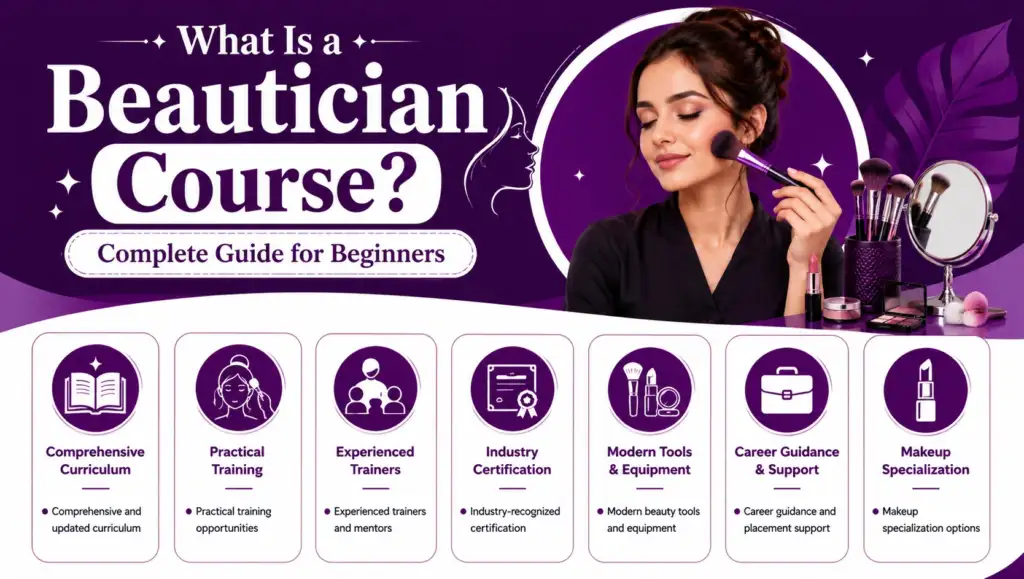
A Beautician Course is a professional training program that teaches essential beauty and wellness skills such as skincare, hair care, makeup application, grooming techniques, and client consultation. It combines theoretical knowledge with practical training, helping students prepare for real-world beauty industry roles.
The growing popularity of beautician training is closely linked to the increasing demand for professional beauty services. Clients today seek skilled experts who can provide personalized treatments, makeup services, and beauty solutions. As a result, trained professionals are finding opportunities in salons, spas, wellness centers, bridal studios, and independent beauty businesses.
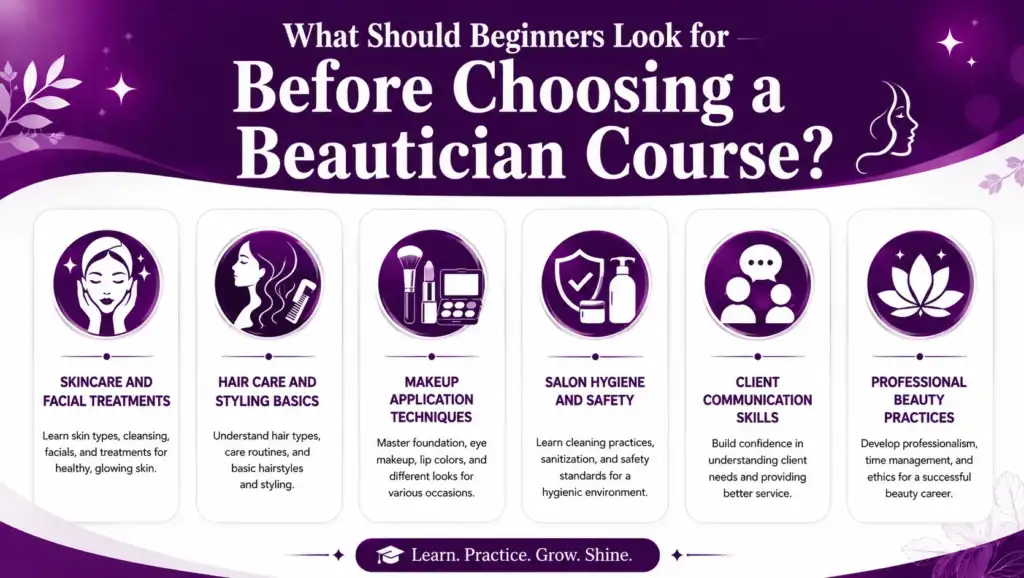
A typical Beautician Course focuses on:
- Skincare and facial treatments
- Hair care and styling basics
- Makeup application techniques
- Salon hygiene and safety
- Client communication skills
- Professional beauty practices
Those interested in understanding the curriculum in detail can explore a comprehensive beauty course syllabus to see the practical and theoretical subjects commonly included in beauty education.
Another reason for the course’s popularity is career flexibility. Graduates can work in various roles depending on their interests and specialization. Some pursue careers as a Bridal Makeup Artist, while others become beauty consultants, salon professionals, skincare specialists, or Wedding Makeup Artists.
A Professional Beautician Course not only develops technical skills but also builds confidence, professionalism, and client-handling abilities. For beginners looking for a practical and rewarding career path, it serves as a strong starting point in the growing beauty and wellness industry.
Core Skills You Learn During a Professional Beautician Course
A Professional Beautician Course equips students with the practical skills needed to build a successful career in the beauty industry. The training focuses on both technical expertise and professional development, helping students become confident beauty professionals.
One of the key areas covered is skincare. Students learn how to analyze different skin types, perform facial treatments, recommend suitable skincare routines, and understand the proper use of beauty products. These skills enable professionals to provide personalized beauty solutions to clients.
Hair care and styling are also important components of a Beautician Course. Learners gain knowledge of basic hair treatments, styling techniques, and hair maintenance practices commonly used in salons and beauty studios.
Many students also choose a Professional Makeup Course to expand their expertise. Makeup training covers techniques for different occasions, face shapes, and skin tones, making it especially beneficial for those who want to become a Bridal Makeup Artist or Wedding Makeup Artist.
How Practical Training Builds Industry Confidence
One of the greatest benefits of structured beauty training programs is hands-on learning. Students practice with professional tools, work under expert guidance, and gain experience handling real client requirements.
Practical training helps students:
- Build confidence in performing beauty treatments
- Strengthen client communication skills
- Understand professional salon standards
- Improve time management and workplace discipline
- Gain industry-ready experience
By combining theoretical knowledge with practical exposure, a Professional Beautician Course prepares students to confidently enter the beauty and wellness industry and pursue a variety of career opportunities.
Career Opportunities After Completing a Beautician Course
One of the biggest benefits of completing a Beautician Course is the wide range of career opportunities it offers. As the beauty and wellness industry continues to grow, trained professionals are needed in salons, spas, bridal studios, wellness centers, and freelance beauty businesses.
A Professional Beautician Course helps students develop practical skills that can be applied across multiple career paths. Depending on your interests and specialization, you can choose to work independently, join an established salon, or even start your own beauty venture.
Many graduates begin as salon beauticians, where they perform skincare treatments, hair services, makeup applications, and client consultations. Others choose to specialize in makeup artistry through a Professional Makeup Course, opening doors to bridal and event-based opportunities.
For individuals passionate about makeup, becoming a Bridal Makeup Artist or Wedding Makeup Artist can be a highly rewarding career. These professionals are often in demand for weddings, engagements, receptions, photoshoots, and special occasions.
Those interested in exploring long-term growth opportunities in the beauty sector can refer to this cosmetology career guide, which highlights various career paths available after professional training.
Career Path vs Growth Potential
| Career Path | Key Skills | Growth Potential |
| Salon Beautician | Skincare, hair care, customer service | Stable career growth in salons and spas |
| Bridal Makeup Artist | Bridal makeup, client consultation | High demand during wedding seasons |
| Wedding Makeup Artist | Advanced makeup skills, portfolio building | Strong freelance opportunities |
| Beauty Consultant | Product knowledge, communication | Opportunities with beauty brands |
| Freelance Beauty Professional | Multi-service expertise, personal branding | Flexible income and independent growth |
| Salon Owner | Beauty skills, business management | Long-term business scalability |
Apart from employment opportunities, a Beautician Course also supports entrepreneurship. Many professionals eventually establish their own beauty studios, makeup businesses, or salon brands.
With the right skills, practical experience, and dedication, a Beautician Course can serve as the foundation for a creative, flexible, and financially rewarding career in the beauty industry.
Beautician Course vs Self-Learning: Which Delivers Better Results?
Many beginners start their beauty journey through online tutorials, social media content, and free learning resources. While self-learning can help build basic knowledge, it often lacks the structure and practical exposure needed to develop professional skills.
A Beautician Course follows a systematic curriculum designed to teach students industry-relevant techniques through expert guidance and hands-on training. Instead of learning through trial and error, students receive step-by-step instruction that helps them build confidence and improve their skills more effectively.
One of the biggest advantages of a Professional Beautician Course is practical experience. Students get the opportunity to work with beauty tools, products, and real-world scenarios that prepare them for professional environments.
For aspiring Bridal Makeup Artists and Wedding Makeup Artists, professional training is especially valuable. Bridal makeup requires precision, client consultation skills, and an understanding of different beauty preferences-areas that are difficult to master through self-learning alone.
Self-Learning vs Professional Training
| Factor | Self-Learning | Professional Beautician Course |
| Learning Approach | Self-directed | Structured curriculum |
| Practical Training | Limited | Extensive hands-on practice |
| Expert Guidance | Minimal | Professional mentorship |
| Certification | Not available | Industry-recognized certification |
| Client Exposure | Rare | Real-world practice opportunities |
| Career Opportunities | Limited credibility | Better employability and growth |
| Professional Network | Difficult to build | Access to trainers and industry connections |
A Professional Makeup Course also provides exposure to advanced makeup techniques, professional products, and portfolio-building opportunities. These advantages can significantly improve career prospects and help students stand out in a competitive market.
While self-learning can be a useful starting point, professional education offers the skills, credibility, and practical experience needed to build a sustainable career. For individuals who are serious about entering the beauty industry, a Beautician Course typically delivers faster and more reliable results.
How a Professional Makeup Course Supports Career Growth
A Professional Makeup Course can be a valuable addition to a Beautician Course because it allows students to specialize in one of the most in-demand areas of the beauty industry. As clients increasingly seek customized makeup services for weddings, events, and photoshoots, professionals with advanced makeup skills often enjoy better career opportunities and higher earning potential.
The course typically covers a variety of makeup techniques, including:
- Day and evening makeup
- Bridal makeup applications
- HD and airbrush makeup
- Contouring and highlighting
- Color correction techniques
- Makeup for different skin tones
These specialized skills help beauty professionals expand their service offerings and attract a wider client base.
For aspiring Bridal Makeup Artists, advanced makeup training is essential. Bridal clients expect flawless, long-lasting looks that complement their features, attire, and event themes. Similarly, a Wedding Makeup Artist must be able to deliver consistent results while working within tight schedules and client expectations.
Professionals who combine beautician training with makeup specialization can also expand their career opportunities by offering professional beauty services that cater to diverse customer needs. This not only increases client satisfaction but also creates additional revenue opportunities.
A Professional Makeup Course can open doors to careers in:
- Bridal studios
- Beauty salons
- Fashion and photography projects
- Freelance makeup artistry
- Beauty consulting
- Makeup training and education
As beauty trends continue to evolve, professionals with advanced makeup expertise often have a competitive advantage. By combining a Beautician Course with specialized makeup training, individuals can build a stronger portfolio, enhance their credibility, and position themselves for long-term growth in the beauty industry.
Who Should Join a Beautician Course?
A Beautician Course is suitable for anyone who wants to develop professional beauty skills and build a career in the beauty and wellness industry. One of the biggest advantages of beauty education is that it welcomes beginners, making it accessible to people from different educational and professional backgrounds.
Students who have recently completed their schooling often choose a Professional Beautician Course because it offers a practical career path with strong growth potential. Instead of spending years acquiring general skills, they can gain specialized knowledge and start building their careers much sooner.
The course is also ideal for individuals looking for a career change. Many people transition into the beauty industry because it combines creativity, flexibility, and entrepreneurship opportunities. With proper training, they can develop industry-relevant skills and establish themselves as beauty professionals.
Aspiring Bridal Makeup Artists and Wedding Makeup Artists can particularly benefit from professional training. Structured learning helps them master beauty techniques, understand client requirements, and gain practical experience that is essential for success in the bridal industry.
Those interested in learning more about career pathways and industry opportunities can explore these beauty education insights to better understand the evolving beauty sector.
A Beautician Course is especially beneficial for:
- Students interested in beauty careers
- Individuals seeking a career change
- Aspiring Bridal Makeup Artists
- Future Wedding Makeup Artists
- Freelancers looking to improve credibility
- Salon professionals upgrading their skills
- Entrepreneurs planning to start beauty businesses
Whether your goal is employment, freelancing, specialization, or entrepreneurship, a Beautician Course can provide the practical knowledge and confidence needed to succeed in the growing beauty industry.
What Should Beginners Look for Before Choosing a Beautician Course?
Choosing the right Beautician Course is an important step because the quality of training can directly influence your career growth and professional confidence. With many beauty institutes offering similar programs, beginners should focus on factors that provide real learning value rather than selecting a course based only on fees or duration.
The first aspect to evaluate is the curriculum. A good Professional Beautician Course should cover essential topics such as skincare, hair care, makeup artistry, beauty treatments, client consultation, and salon hygiene. A balanced curriculum ensures students gain both theoretical knowledge and practical skills.
Practical training is equally important. Since the beauty industry is skill-based, hands-on experience helps students understand professional standards and develop confidence before working with clients. Institutes that provide live demonstrations, supervised practice sessions, and real-world exposure often offer better learning outcomes.
When comparing courses, consider the following factors:
- Comprehensive and updated curriculum
- Practical training opportunities
- Experienced trainers and mentors
- Industry-recognized certification
- Modern beauty tools and equipment
- Career guidance and placement support
- Makeup specialization options
Students who want to become a Bridal Makeup Artist or Wedding Makeup Artist should also check whether the institute offers advanced modules through a Professional Makeup Course. Specialized training can help build expertise and improve career prospects in the bridal beauty segment.
Another important factor is industry exposure. Institutes that provide internships, portfolio-building opportunities, and professional mentorship can help students transition more smoothly into the beauty industry.
By carefully evaluating these factors, beginners can choose a Beautician Course that aligns with their career goals and provides the skills needed for long-term success in the beauty and wellness industry.
Final Thoughts
A Beautician Course is one of the most practical ways to begin a career in the beauty and wellness industry. It provides a strong foundation in skincare, hair care, makeup application, client consultation, and professional beauty practices, helping beginners develop industry-ready skills.
Whether you aspire to become a Bridal Makeup Artist, work as a Wedding Makeup Artist, join a salon, or start your own beauty business, professional training can accelerate your growth and improve your career prospects. A structured Professional Beautician Course offers the practical experience, expert guidance, and confidence needed to succeed in a competitive industry.
For individuals who want to expand their expertise further, a Professional Makeup Course can open additional opportunities in bridal, fashion, and event makeup. By choosing the right training program and committing to continuous learning, aspiring beauty professionals can build a rewarding and sustainable career in the ever-growing beauty industry.
Ready to Start Your Beauty Career?
The beauty industry continues to create exciting opportunities for skilled professionals who are passionate about helping others look and feel their best. With the right training, practical experience, and industry guidance, you can build a successful career in salons, bridal studios, beauty clinics, or even your own business.
If you’re ready to take the first step toward becoming a beauty professional, explore the Beautician Course and connect with experienced trainers who can help you develop the skills needed for long-term success in the beauty and wellness industry.
FAQs
1. What is a Beautician Course?
A Beautician Course is a professional training program that teaches essential beauty and wellness skills, including skincare, hair care, makeup application, beauty treatments, and client consultation. It helps beginners gain practical knowledge and industry-ready expertise for various beauty careers.
2. How long does a Beautician Course take to complete?
The duration of a Beautician Course varies depending on the institute and curriculum. Some beginner-level programs can be completed within a few months, while advanced Professional Beautician Courses may take longer and include specialized training modules.
3. Can beginners join a Professional Beautician Course?
Yes. Most Professional Beautician Courses are designed for beginners and do not require prior experience. Students receive step-by-step training, practical exposure, and guidance from experienced trainers to help them build confidence and professional skills.
4. What skills are taught in a Professional Makeup Course?
A Professional Makeup Course typically covers makeup application techniques, color theory, bridal makeup, HD makeup, contouring, client consultation, product knowledge, and portfolio development. These skills help students provide professional makeup services for various occasions.
5. Can a Beautician Course help me become a Bridal Makeup Artist?
Yes. A Beautician Course provides a strong foundation in beauty services, while additional makeup specialization can help you become a successful Bridal Makeup Artist. Practical training and hands-on experience are particularly important for building expertise in bridal beauty services.
6. What is the difference between a Beautician Course and cosmetology training?
A Beautician Course primarily focuses on beauty treatments, skincare, makeup, and grooming services. Cosmetology programs may cover a broader range of topics, including advanced hair treatments, salon management, and specialized beauty techniques. The exact curriculum varies by institution.
7. Are certifications important in the beauty industry?
Certification can enhance credibility and demonstrate professional training. While practical skills are essential, completing a recognized Professional Beautician Course often helps professionals gain trust from employers, clients, and beauty businesses.
8. What career opportunities are available after completing a Beautician Course?
Graduates can pursue careers as salon beauticians, beauty consultants, skincare specialists, freelance beauty professionals, Bridal Makeup Artists, Wedding Makeup Artists, salon managers, or beauty entrepreneurs. The beauty industry offers diverse career paths depending on individual interests and specialization.
9. Can I work as a Wedding Makeup Artist after completing training?
Yes. With proper beauty and makeup training, practical experience, and portfolio development, individuals can build a career as a Wedding Makeup Artist. Many professionals combine a Beautician Course with a Professional Makeup Course to strengthen their expertise.
10. How do I choose the best Beautician Course for my career goals?
When selecting a Beautician Course, consider factors such as curriculum quality, practical training opportunities, trainer expertise, certification, specialization options, and career support. Choosing a program that aligns with your long-term goals can help maximize your learning and career growth.