The beauty industry has transformed into a thriving career sector, creating opportunities for skilled professionals in bridal studios, salons, fashion shoots, and freelance businesses. As clients increasingly seek personalized and professional makeup services, the demand for trained makeup artists continues to grow.
For aspiring professionals, enrolling in a Professional Makeup Course is one of the most effective ways to build the technical skills and industry knowledge required for long-term success. Unlike learning solely through online tutorials, a structured Makeup Artist Course provides hands-on training, expert guidance, and practical experience that help students develop confidence and professionalism.
Many successful makeup artists begin their journey with formal training before specializing as a Bridal Makeup Artist or Wedding Makeup Artist. These roles require advanced makeup techniques, client consultation skills, and an understanding of current beauty trends.
In this step-by-step guide, you’ll learn what a Professional Makeup Course includes, the essential skills you need to master, career opportunities available after training, and how to choose the right course to build a successful career in the beauty industry.
What Is a Makeup Artist Course?
A Makeup Artist Course is a professional training program that teaches the skills, techniques, and industry practices required to become a successful makeup professional. It is designed for individuals who want to build a career in makeup artistry rather than treating makeup as a hobby.
A structured Professional Makeup Course covers much more than applying makeup products. Students learn skin preparation, color theory, facial analysis, product selection, makeup application techniques, hygiene standards, and client consultation. These skills help aspiring makeup artists create customized looks for different occasions and client requirements.
The popularity of makeup artistry as a career has increased significantly due to the growing demand for beauty services across weddings, fashion events, photoshoots, social media content creation, and special occasions. As a result, professionally trained makeup artists are highly valued in the beauty industry.
For individuals interested in understanding the journey of becoming a makeup artist, professional training serves as the foundation for building technical expertise and gaining practical experience.
A Makeup Artist Course also helps students understand industry expectations and professional standards. Through guided learning and hands-on practice, they develop the confidence needed to work with different skin tones, face shapes, and client preferences.
Many students eventually specialize in areas such as bridal, editorial, fashion, or event makeup. For those aspiring to become a Bridal Makeup Artist or Wedding Makeup Artist, professional training provides the essential skills needed to deliver high-quality and long-lasting makeup looks.
By combining creativity with technical knowledge, a Professional Makeup Course helps students transform their passion for beauty into a rewarding and sustainable career.
Essential Skills You Learn in a Professional Makeup Course
A Professional Makeup Course is designed to help students develop the technical and creative skills required to work confidently in the beauty industry. Whether your goal is to work in a salon, become a freelance makeup artist, or build a career as a Bridal Makeup Artist, mastering these skills is essential for professional success.
One of the first areas students learn is skin preparation. Understanding different skin types and preparing the skin correctly helps create a smooth and long-lasting makeup finish. This knowledge is especially important when working with clients for weddings, events, and photoshoots.
Students also gain expertise in color theory, which helps them choose the right shades and products for different skin tones. Product knowledge is another important component, as makeup artists must understand which products work best for specific looks and occasions.
A Makeup Artist Course also focuses on:
- Foundation matching and blending
- Eye makeup techniques
- Contouring and highlighting
- Bridal and event makeup
- Makeup hygiene and safety
- Client consultation skills
These skills help professionals create personalized looks while maintaining high standards of quality and customer satisfaction.
Why Hands-On Practice Matters in Makeup Training
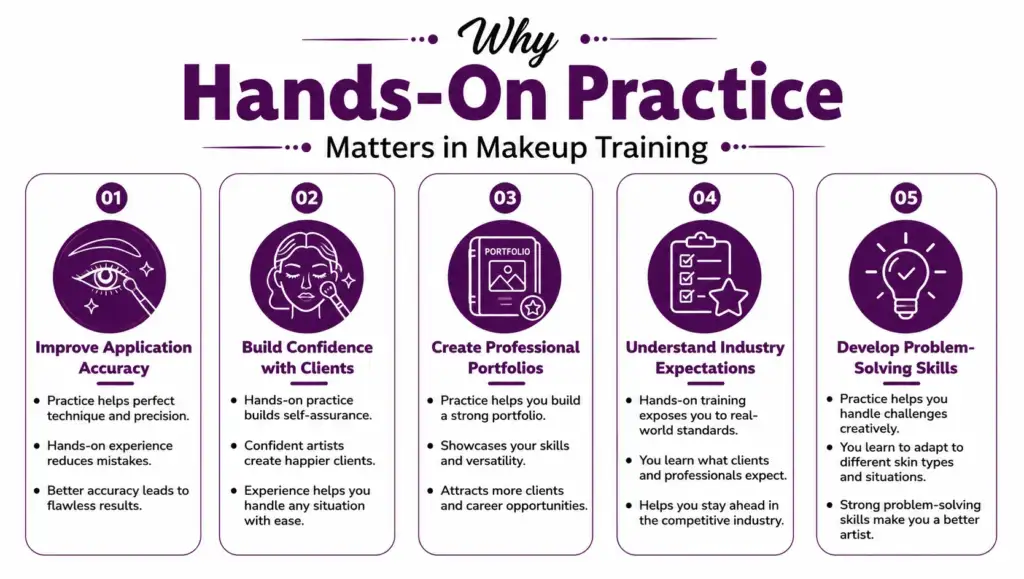
Theoretical knowledge is important, but practical experience is what transforms a learner into a professional. Through structured makeup training courses, students gain hands-on exposure to real techniques, tools, and client requirements.
Practical training helps students:
- Improve application accuracy
- Build confidence with clients
- Create professional portfolios
- Understand industry expectations
- Develop problem-solving skills
By combining technical knowledge with real-world practice, a Professional Makeup Course prepares students to work confidently as makeup professionals and pursue specialized roles such as Wedding Makeup Artist or Bridal Makeup Artist.
Step-by-Step Path to Becoming a Professional Makeup Artist
Building a successful career as a makeup artist requires more than creativity. It involves structured learning, practical experience, and continuous skill development. A Professional Makeup Course provides the foundation needed to develop technical expertise and gain industry credibility.
The first step is learning the fundamentals of makeup artistry. Students begin by understanding skin types, product application, color theory, and makeup techniques. This knowledge helps create professional and customized looks for different clients.
The next step is gaining practical experience through a Makeup Artist Course. Hands-on training allows students to work with professional tools, practice different makeup styles, and build confidence in real-world situations.
Creating a strong portfolio is equally important. A portfolio showcases your skills, creativity, and versatility, making it easier to attract clients and professional opportunities. Aspiring Bridal Makeup Artists and Wedding Makeup Artists often use their portfolios to demonstrate their expertise in bridal and event makeup.
For a detailed understanding of career progression, this makeup artist guide provides useful insights into the journey from beginner to professional.
Step vs Career Outcome
| Step | Career Benefit |
| Learn Makeup Fundamentals | Build a strong technical foundation |
| Complete Professional Training | Gain industry-recognized skills |
| Practice on Models and Clients | Improve confidence and accuracy |
| Create a Portfolio | Showcase expertise to potential clients |
| Build Industry Connections | Access career and freelance opportunities |
| Continue Skill Development | Stay competitive with evolving trends |
By following these steps consistently, aspiring makeup artists can establish themselves in the beauty industry and create long-term career opportunities in salons, bridal studios, fashion projects, and freelance businesses.
Professional Makeup Course vs Self-Learning
With countless makeup tutorials available online, many aspiring artists wonder whether self-learning is enough to build a successful career. While online resources can help beginners understand basic techniques, they often lack the structure, feedback, and practical exposure needed for professional growth.
A Professional Makeup Course follows a well-designed curriculum that teaches students step by step. Instead of relying on trial and error, learners receive expert guidance, hands-on training, and industry insights that help them develop professional-level skills more efficiently.
One of the biggest differences is mentorship. Professional trainers can identify mistakes, provide personalized feedback, and teach techniques that may not be covered in free online content. This support helps students improve faster and avoid common learning gaps.
For aspiring Bridal Makeup Artists and Wedding Makeup Artists, professional training is particularly valuable because it provides exposure to advanced makeup techniques, client consultations, and real-world beauty scenarios.
Self-Learning vs Professional Training
| Factor | Self-Learning | Professional Makeup Course |
| Learning Structure | Unorganized and self-paced | Structured curriculum |
| Expert Guidance | Limited | Professional mentorship |
| Practical Exposure | Minimal | Hands-on training |
| Portfolio Development | Self-managed | Guided portfolio creation |
| Certification | Not available | Industry-recognized certification |
| Client Experience | Limited opportunities | Real-world practice sessions |
| Career Readiness | Takes longer to develop | Faster professional growth |
Another advantage of a Makeup Artist Course is the opportunity to network with trainers, industry professionals, and fellow students. These connections can often lead to internships, collaborations, and future career opportunities.
While self-learning can be a useful starting point, professional education offers the practical skills, credibility, and confidence needed to build a successful career. For individuals serious about becoming professional makeup artists, structured training remains the more effective pathway.
Career Opportunities for Bridal and Wedding Makeup Artists
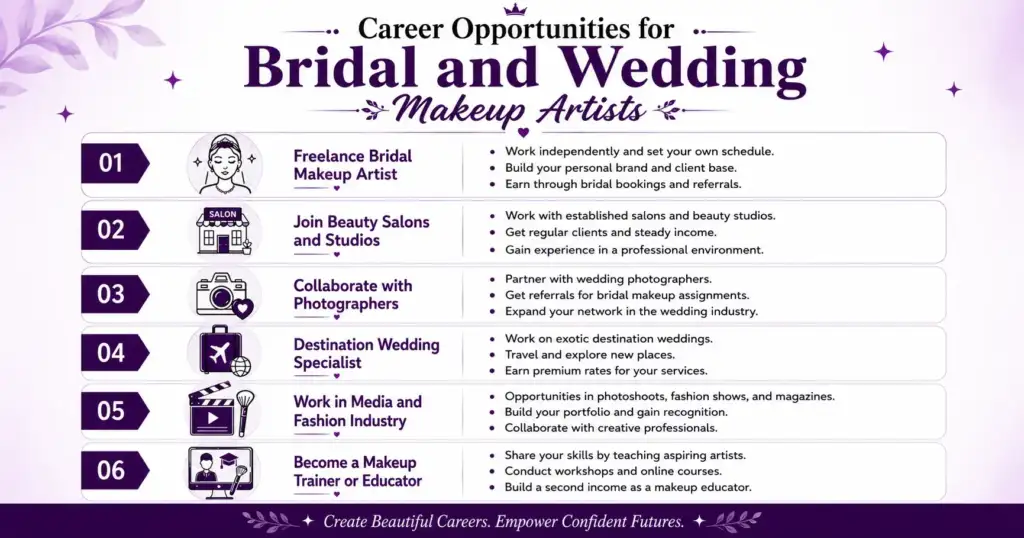
The beauty industry offers a wide range of career opportunities for individuals who complete a Professional Makeup Course. As demand for personalized beauty services continues to rise, skilled makeup artists can build successful careers across multiple sectors.
One of the most popular career paths is becoming a Bridal Makeup Artist. Bridal makeup requires specialized skills, attention to detail, and the ability to create long-lasting looks that suit different wedding styles and client preferences. Since weddings occur throughout the year, this specialization often provides consistent career opportunities.
Similarly, a Wedding Makeup Artist works closely with brides, bridesmaids, and family members for wedding events and celebrations. These professionals are expected to deliver flawless results while managing client expectations and tight schedules.
Apart from bridal services, makeup artists can explore opportunities in:
- Beauty salons and studios
- Fashion and photography projects
- Film and media productions
- Freelance makeup services
- Beauty consulting
- Makeup education and training
Many successful professionals begin their careers by working with established beauty brands before transitioning into independent businesses. Learning from experienced professionals and understanding their beauty industry journey can provide valuable insights into building a long-term career.
A Makeup Artist Course also creates opportunities for entrepreneurship. With the right skills, portfolio, and client network, makeup artists can launch their own beauty studios, freelance brands, or specialized bridal makeup businesses.
As the beauty industry continues to expand, professionals who combine technical expertise with strong client service skills often enjoy greater career stability, higher earning potential, and long-term growth opportunities.
Who Should Enroll in a Makeup Artist Course?
A Makeup Artist Course is ideal for anyone who wants to turn their passion for beauty into a professional career. Whether you are a beginner with no prior experience or someone already working in the beauty industry, professional training can help you develop valuable skills and expand your career opportunities.
Students who have recently completed their education often choose a Professional Makeup Course because it offers a practical and creative career path. The beauty industry values skills and expertise, making it possible for talented professionals to build successful careers without following traditional career routes.
The course is also suitable for individuals looking for a career change. Many professionals transition into makeup artistry because of its flexibility, earning potential, and opportunities for self-employment.
A Makeup Artist Course can be particularly beneficial for:
- Students interested in beauty careers
- Aspiring Bridal Makeup Artists
- Future Wedding Makeup Artists
- Beauticians looking to upgrade their skills
- Freelancers wanting professional certification
- Salon professionals seeking specialization
- Entrepreneurs planning to start beauty businesses
Individuals who already have experience through a Beautician Course can further strengthen their expertise by specializing in makeup artistry. This combination of skills often creates more career opportunities and allows professionals to offer a wider range of beauty services.
Those interested in improving their makeup knowledge can also explore makeup application techniques to better understand industry practices and product application methods.
Regardless of your background, a Professional Makeup Course provides the technical knowledge, practical training, and confidence needed to build a successful career in the beauty industry.
How to Choose the Right Professional Makeup Course
Choosing the right Professional Makeup Course is one of the most important decisions for aspiring makeup artists. The quality of training you receive can directly influence your skills, confidence, and future career opportunities.
The first factor to consider is the course curriculum. A good Makeup Artist Course should cover essential topics such as skin preparation, color theory, makeup techniques, product knowledge, hygiene standards, and client consultation. A well-rounded curriculum ensures students gain both theoretical knowledge and practical expertise.
Practical training should also be a top priority. Since makeup artistry is a skill-based profession, hands-on experience helps students improve their techniques and prepare for real client situations. Look for institutes that offer live demonstrations, supervised practice sessions, and portfolio-building opportunities.
Before enrolling, evaluate the following factors:
- Comprehensive makeup curriculum
- Experienced trainers and mentors
- Hands-on practical sessions
- Industry-recognized certification
- Portfolio development support
- Modern makeup tools and products
- Career guidance and placement assistance
Students who want to become a Bridal Makeup Artist or Wedding Makeup Artist should also check whether the course includes advanced bridal and event makeup modules. Specialized training can help professionals stand out in a competitive market.
Another important consideration is industry exposure. Institutes that provide workshops, networking opportunities, and real-world projects often help students transition more smoothly into professional roles.
The best Professional Makeup Course is one that aligns with your career goals, provides strong practical training, and helps you build a portfolio that showcases your skills. Taking the time to compare programs can help you make a more informed decision and maximize your long-term career growth.
Final Thoughts
A Professional Makeup Course provides the skills, practical experience, and industry knowledge needed to build a successful career in makeup artistry. From learning makeup fundamentals and mastering advanced techniques to developing client consultation skills, professional training helps aspiring artists gain confidence and credibility in a competitive industry.
Whether your goal is to become a Bridal Makeup Artist, work as a Wedding Makeup Artist, join a beauty studio, or start your own freelance business, a structured Makeup Artist Course can help you achieve those ambitions. The combination of hands-on practice, professional mentorship, and portfolio development creates a strong foundation for long-term career growth.
As the beauty industry continues to evolve, investing in quality makeup education remains one of the most effective ways to transform your passion for beauty into a rewarding and sustainable profession.
Ready to Build a Successful Makeup Career?
A career in makeup artistry is built on skill, creativity, and continuous learning. Whether you aspire to become a Bridal Makeup Artist, work as a Wedding Makeup Artist, or establish your own beauty brand, professional training can help you develop the expertise needed to stand out in a competitive industry.
With the right guidance, practical experience, and industry-focused education, you can confidently take the first step toward achieving your career goals. To learn more about professional training opportunities and get personalized guidance, Contact Us and connect with our team today.
FAQs
1. What is a Makeup Artist Course?
A Makeup Artist Course is a professional training program that teaches makeup techniques, skin preparation, product knowledge, color theory, and client consultation skills. It helps aspiring artists develop the expertise needed to work in the beauty industry.
2. How long does a Professional Makeup Course take?
The duration varies depending on the curriculum and training level. Most Professional Makeup Courses can range from a few weeks to several months and may include both theoretical learning and practical training sessions.
3. Can beginners join a Makeup Artist Course?
Yes. Most Makeup Artist Courses are designed for beginners and do not require prior experience. Students are trained from the basics and gradually progress to advanced makeup techniques through structured learning.
4. What skills are taught in a Professional Makeup Course?
A Professional Makeup Course typically covers skin preparation, foundation matching, color theory, bridal makeup, eye makeup techniques, contouring, highlighting, hygiene standards, and client consultation skills.
5. Can I become a Bridal Makeup Artist after completing training?
Yes. A Professional Makeup Course provides the technical foundation required to become a Bridal Makeup Artist. Additional practice, portfolio development, and experience working with bridal clients can further strengthen your career prospects.
6. Is certification important for makeup artists?
Certification helps validate your training and professional skills. While practical expertise remains essential, completing a recognized Makeup Artist Course can improve credibility and increase career opportunities.
7. What career opportunities are available after a Makeup Artist Course?
Graduates can work as freelance makeup artists, salon makeup professionals, Wedding Makeup Artists, bridal specialists, beauty consultants, fashion makeup artists, or even start their own beauty business.
8. Can I work as a Wedding Makeup Artist after certification?
Yes. Many professionals begin their careers as Wedding Makeup Artists after completing a Professional Makeup Course. Practical experience and a strong portfolio can help attract clients and build a successful reputation.
9. Is freelancing possible after a Professional Makeup Course?
Absolutely. Many makeup artists choose freelancing because it offers flexibility and the opportunity to build a personal brand. Professional training helps freelancers gain the skills and confidence needed to work independently.
10. How do I choose the best Makeup Artist Course?
Look for a course that offers practical training, experienced instructors, an updated curriculum, certification, portfolio development opportunities, and career guidance. The right program should align with your long-term career goals.